Rapport annuel 2025
Lettre d'introduction

Chers amis et partenaires,
L'année 2025 n'a pas été facile pour les communautés ni pour les organisations qui ont choisi de se tenir à leurs côtés. Les ressources se sont raréfiées dans l'ensemble du secteur du développement. Dans plusieurs contextes où Tostan intervient, l'insécurité et la fragilité ont exercé une pression supplémentaire sur des communautés qui devaient déjà faire face à des conditions difficiles. Plus généralement, les idées reçues de longue date concernant le financement du développement, la définition de ses priorités et ce qui constitue un progrès durable sont aujourd'hui remises en question, à juste titre.
Ce que cette année a confirmé, une fois de plus, c'est que le changement durable ne dépend pas uniquement de conditions favorables. Il dépend de la capacité collective des gens à comprendre leur réalité, à s'organiser autour de priorités communes et à agir avec détermination.
Cette conviction est au cœur du travail de Tostan. Notre démarche ne repose pas sur des solutions toutes faites. Elle commence par l’éducation dans les langues locales, à travers le dialogue, la réflexion et une exploration commune des droits, des responsabilités et des aspirations des communautés pour leur avenir. Ce processus renforce les individus. Les femmes, les hommes et les jeunes acquièrent des connaissances, de la confiance en eux et la capacité de diriger. Ces changements individuels se transforment en changements collectifs. Les communautés s’organisent, définissent leurs priorités et passent à l’action. Au fil du temps, ces actions façonnent l’ensemble du territoire : davantage d’enfants scolarisés et enregistrés à la naissance, une gouvernance locale renforcée, une réduction des conflits, un meilleur accès aux services de santé et des économies locales plus inclusives.
Voici le processus qui a permis d'aboutir aux résultats présentés dans ce rapport.
Au Sénégal, en Gambie, en Guinée-Bissau, en Guinée et au Mali, les communautés ont eu recours à ce processus en 2025 pour relever des défis qui pèsent lourdement sur leur quotidien. À Kédougou, des jeunes issus des communautés bassari ont défini une approche de la santé mentale ancrée dans leurs propres pratiques culturelles, sans attendre qu’un expert extérieur identifie le problème ou conçoive la solution. Au Mali, des comités communautaires de paix ont résolu des conflits fonciers et des tensions au sein des ménages avant qu’ils ne s’aggravent, étendant leur champ d’action à 130 communautés au-delà de celles directement impliquées dans le programme. Au Sénégal et en Guinée-Bissau, les femmes et les jeunes ont transformé leur apprentissage en initiative économique : gestion de fonds de crédit communautaires avec un taux de remboursement de 95 %, financement de microprojets et renforcement de leur participation aux marchés locaux. Je tiens également à rendre hommage à nos équipes dans toute la région, dont la présence constante aux côtés des communautés a rendu ce travail possible au cours d’une année marquée par une réelle incertitude et de vives tensions.
Ces résultats ont une portée qui dépasse le cadre des communautés où ils ont été obtenus. Les défis auxquels les communautés ont dû faire face en 2025 – l'inclusion scolaire, l'état civil, la santé maternelle, la prévention des conflits, la résilience économique et la protection des filles – sont également ceux que les programmes nationaux de développement de toute la région se sont engagés à relever. La Vision 2050 du Sénégal place le capital humain, l'équité sociale, le développement territorial et la bonne gouvernance au cœur de la transformation nationale. Le Plan national de développement axé sur la relance (RF-NDP) de la Gambie donne la priorité à l'éducation, à la gouvernance locale, à l'état civil et à l'autonomisation des femmes. La Stratégie nationale d'émergence et de développement durable (SNEDD) du Mali établit un lien entre la paix, la décentralisation, la citoyenneté et le développement humain. Le cadre national de coopération de la Guinée-Bissau met l'accent sur la gouvernance démocratique, l'accès aux services sociaux et la transformation économique structurelle.
La contribution de Tostan ne consiste pas à se substituer aux systèmes publics. Elle vise à renforcer les conditions au niveau communautaire, la participation, la confiance, l'organisation locale et l'autonomie durable dont les systèmes publics ont besoin pour fonctionner.
Nous clôturons cette année en exprimant notre gratitude envers les partenaires et les donateurs qui ont soutenu ce travail, et surtout envers les communautés qui continuent de le mener. Nous terminons également avec confiance : confiance dans les communautés qui continuent d’aller de l’avant avec dignité et détermination, et dans les jeunes dont les idées, le courage et l’engagement contribuent à façonner un avenir plus juste et plus résilient.
Sobel Aziz Ngom


Directeur Exécutif de Tostan

Résultats 2025 en bref
Personnes ayant bénéficié de la formation

participant aux programmes éducatifs de Tostan en Afrique de l'Ouest
s de personnes supplémentaires
grâce à des actions de sensibilisation menées par la communauté
Les communautés se sont mobilisées

les élèves identifiés comme n'étant pas scolarisés ont été inscrits grâce à des initiatives menées par la communauté

dans les communautés partenaires, ont bénéficié de consultations prénatales

que 14 000 enfants
ont été vaccinés grâce à une mobilisation communautaire

ont été enregistrés après avoir été identifiés comme non enregistrés à la naissance
Gouvernance et citoyenneté

des élus locaux formés à la gouvernance locale et à la responsabilité publique au Sénégal et en Gambie
Comment le changement s'opère
Le processus commence par l'éducation : dans les langues locales, par le dialogue et l'accompagnement, en s'appuyant sur les Droits humains et le partage des responsabilités.
L'éducation comme point de départ
Ici, l’éducation est une invitation à réfléchir, à remettre en question et à imaginer les changements possibles.
Ce point de départ revêt une importance bien plus grande qu’il n’y paraît. Lorsque les gens apprennent dans la langue dans laquelle ils pensent et rêvent, lorsqu’ils sont invités à examiner leur propre réalité plutôt que de se voir imposer le diagnostic de quelqu’un d’autre, il se produit un changement qui va bien au-delà du simple savoir. Les femmes, les hommes et les jeunes acquièrent la confiance nécessaire pour s’exprimer, la capacité d’analyser et la volonté de diriger. Ils commencent à se considérer comme des acteurs de leur propre développement.
Les collectivités agissent en fonction de leurs propres priorités
Dans les communautés isolées et défavorisées où Tostan intervient, les femmes, les hommes et les jeunes forment ou renforcent des comités de gestion, définissent des priorités communes et lancent des initiatives autour des défis qu’ils ont eux-mêmes identifiés. Ils déterminent ce qui doit être fait, dans quel ordre et avec qui. Ce sont précisément ces communautés que les systèmes publics ont le plus de mal à atteindre : des ménages qui ne figurent pas dans les données administratives, des femmes et des filles exclues des processus décisionnels formels, et des jeunes privés d’accès aux opportunités économiques.
Les initiatives locales renforcent les services publics
À mesure que les communautés agissent, les effets se répercutent sur la vie publique locale. Les enfants non scolarisés sont identifiés et inscrits à l'école. Les naissances qui n'avaient pas été enregistrées sont désormais consignées, ce qui améliore la qualité des données d'état civil sur lesquelles s'appuient les ministères chargés de la planification. Les femmes enceintes sont orientées vers les services de santé. Les litiges fonciers trouvent une issue structurée avant de s'aggraver. Les élus locaux dialoguent plus efficacement avec les communautés qu'ils représentent. Les institutions publiques disposent d'une assise locale plus solide pour tenir les engagements pris par les gouvernements.
Le changement se propage via les réseaux sociaux
C'est ce qui garantit la pérennité des résultats. Lorsque l'éducation s'appuie sur les connaissances déjà détenues par les communautés et qu'elle renforce les capacités collectives plutôt que la conformité individuelle, le changement ne dépend pas de la présence continue d'un acteur extérieur. Il se propage à travers les réseaux sociaux. Il résiste aux coupures de financement. Et il engendre des formes de responsabilité locale qu'aucun système de contrôle externe ne peut reproduire. C'est à cela que ressemble le développement mené par les communautés.
Ce qui a marqué l'année 2025
Tostan n'a cessé d'évoluer
En 2025, Tostan a continué à affiner sa manière de soutenir le changement mené par les communautés. Cela a notamment consisté à adapter le Programme de Renforcement des Capacités Communautaires aux besoins de SolarSPELL, une bibliothèque numérique hors ligne alimentée à l’énergie solaire, conçue pour les zones à faible connectivité et accessible via un téléphone portable. Cette adaptation a également permis de faire progresser une révision plus large du programme afin d’y intégrer de nouvelles connaissances sur le bien-être relationnel et la santé mentale. L’objectif est de créer un modèle qui reste ancré dans l’apprentissage en langue locale, le dialogue, la réflexion et l’appropriation par la communauté, tout en restant pertinent et accessible au regard des réalités auxquelles les communautés rurales sont confrontées aujourd’hui. Pour les gouvernements et les partenaires travaillant dans des zones aux infrastructures limitées, cette combinaison est essentielle : elle signifie que l'approche peut atteindre les communautés que la plupart des programmes de développement laissent pour compte.
Le modèle a continué à se répandre
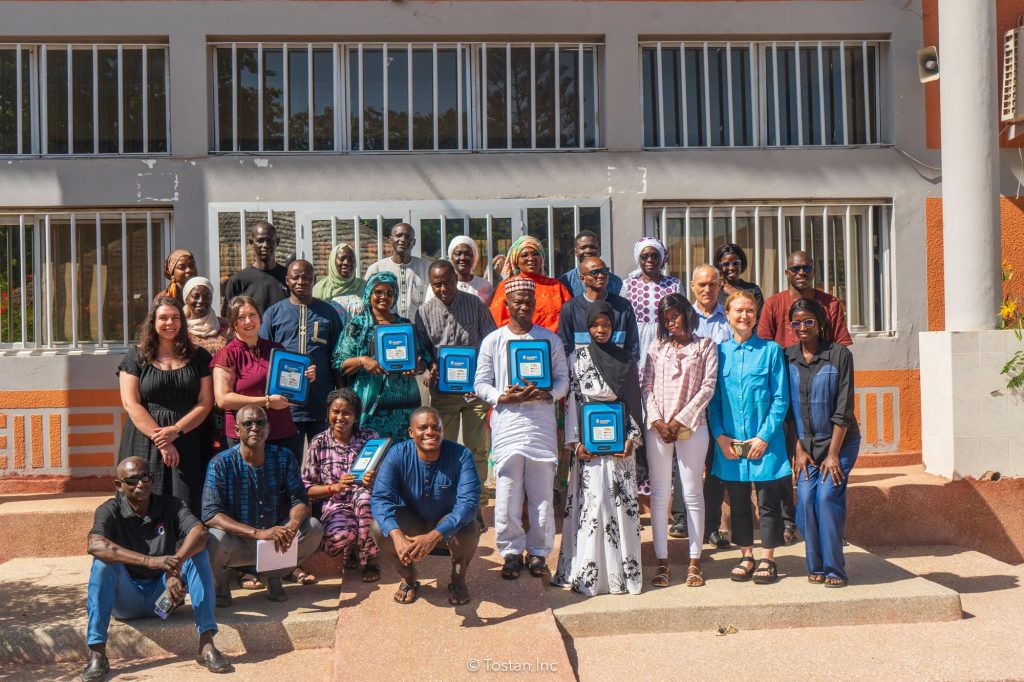
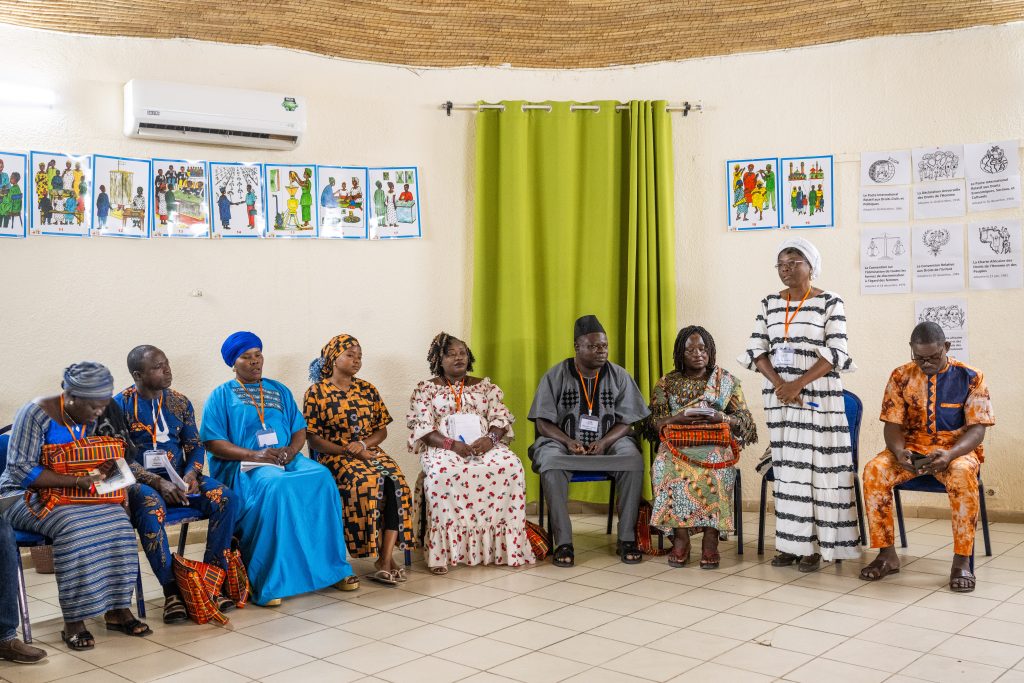
En 2025, la méthodologie de Tostan a continué à se développer grâce à la formation, à l'apprentissage mutuel et aux partenariats institutionnels. Dans le nord du Bénin, 22 organisations locales œuvrant dans des zones fragiles et à haut risque ont adapté l'approche de Tostan, en combinant un travail de cohésion sociale avec une attention particulière portée aux besoins en matière de santé mentale des femmes, des jeunes et des communautés qui supportent le plus lourd fardeau de l'instabilité. Dans la vallée de l'Omo, en Éthiopie, des participants issus de cinq communautés autochtones se sont engagés dans le modèle de Tostan, repartant avec des plans d'action concrets et des comités de gestion communautaire nouvellement créés. À Accra, 30 acteurs de la société civile d'Afrique de l'Ouest et de l'Est ont adopté la méthodologie de Tostan comme cadre pratique pour le changement des normes sociales et la transformation menée par les communautés. Des séminaires ont également eu lieu en Sierra Leone, en Côte d'Ivoire, au Sénégal et en Gambie.
Ces expériences mettent en lumière une distinction qui revêt une importance particulière dans la manière dont les partenaires institutionnels envisagent la mise à l'échelle. Les organisations ne cherchent pas à reproduire le programme de Tostan tel qu'il a été conçu. Elles s'inspirent de sa méthodologie pour s'adapter à leur propre contexte, en adaptant les outils, le déroulement et le contenu à des réalités sociales spécifiques.
Depuis 2015, 1 025 professionnels issus de 50 pays ont découvert l'approche et la méthodologie de Tostan lors de nos séminaires de partage et d'apprentissage mutuel. La question la plus difficile est de savoir ce qui se passe lorsque ces professionnels mettent en œuvre cette approche sans la présence directe de Tostan.
Une étude du Fonds mondial pour les enfants apporte des preuves solides à cet égard. Parmi les organisations qui ont appliqué la méthodologie de Tostan de manière indépendante au Libéria et en Sierra Leone, les évaluateurs ont constaté un renforcement du leadership des femmes et des jeunes, une diminution des conflits et de la violence sexiste, une amélioration de l’assiduité scolaire, ainsi qu’une remise en question par les communautés des pratiques néfastes grâce à un dialogue ancré dans leurs propres valeurs.
Témoignages des participants à la formation

« Ce que j’ai découvert grâce à la formation dispensée par Tostan, c’est une nouvelle façon d’aborder le travail de développement. Cette formation a transformé notre manière de concevoir les programmes. Au lieu d’appliquer des approches toutes faites, nous travaillons désormais avec les communautés pour définir leurs priorités et les impliquer dès le début. Cela rend nos interventions plus pertinentes et plus durables. »
Songaye George Buannie,
Spécialiste de la mobilisation des hommes et de la violence sexiste, Sierra Leone, 2025
« Même si nous intervenons souvent au sein des communautés avec de bonnes intentions, notre approche présente parfois des lacunes importantes. Cette formation a mis l’accent sur la nécessité de laisser les communautés définir leur propre vision et identifier les ressources dont elles disposent déjà. Un développement significatif se fait avec les communautés, et non pour elles. Chez Caritas Ghana, nous prévoyons de diffuser cette approche à nos structures locales afin que ceux qui travaillent directement avec les communautés puissent l’intégrer dans leur travail quotidien. »
Richard Nyihaba Akrugu,
Caritas Ghana, Ghana, 2025
Notre impact
les accompagnateurs dans le domaine de l'éducation parentale
enfants non scolarisés inscrits
Enfants non enregistrés enregistrés
Petite enfance, accès à l'école et état civil
Enfants inscrits
62
Actes de naissance délivrés
63
Dans 76 communautés de Guinée-Bissau, de Gambie et du Mali, des parents et des personnes s’occupant d’enfants ont participé à des sessions de formation sur la stimulation précoce du cerveau, le développement de l’enfant et les normes sociales — animées dans les langues locales sous forme de dialogue. Le suivi a permis de constater des changements dans les pratiques quotidiennes de prise en charge : les pères et les mères parlent davantage avec leurs enfants, lisent à la maison et ont relancé la tradition du conte.
Les communautés qui identifient les personnes laissées pour compte — et qui agissent par le biais des institutions existantes pour combler ce fossé — contribuent à l'exactitude des données utilisées par les ministères nationaux chargés de la planification pour allouer les budgets.
les participants aux sessions de formation
communautés de programmes directs
nouvelles communautés touchées
Prévention des conflits au Mali
Les femmes à la tête de la médiation
↑ significatif
Au Mali, le recul de l'autorité de l'État a laissé les communautés seules face aux tensions liées à la terre et aux ressources communes, sans véritable soutien institutionnel. 3 356 personnes issues de 30 communautés ont participé à des ateliers sur le dialogue et la responsabilité collective. Les femmes se sont imposées comme des figures de proue des processus de médiation des conflits, dont elles sont habituellement exclues.
Les comités communautaires pour la paix ont traité les conflits fonciers et les tensions intercommunautaires par le biais de délibérations, avant que ceux-ci ne s'enracinent et ne deviennent plus difficiles à résoudre. Grâce à un travail de sensibilisation mené par leurs pairs, leur action s'est étendue à 130 communautés supplémentaires, dont aucune ne participait directement au programme.
Lorsque les différends sont résolus par la concertation, la confiance sociale s'en trouve renforcée et les communautés sont mieux à même de gérer les conflits futurs.
les personnes qui ont recours à des microcrédits
taux de remboursement
en capital d'amorçage placé sous gestion communautaire
L'inclusion économique dans trois pays
Taux de remboursement
95
Les participantes et les jeunes
majorité
Multiplicateur d'impact communautaire
x6
Dans une centaine de communautés du Sénégal, de la Gambie et de la Guinée-Bissau, environ 112 000 dollars de capital d'amorçage, gérés par les communautés elles-mêmes, ont permis à 2 580 personnes d'accéder à des microcrédits destinés à la transformation agricole, au petit commerce et à la production alimentaire. Ce capital a circulé en moyenne six fois au sein des mêmes communautés.
En Guinée-Bissau, des subventions d'un montant total de 59 000 dollars, octroyées par le Fonds de la CEDEAO, ont permis de venir en aide à 406 personnes, dont 303 femmes et filles, en finançant des microprojets et en contribuant aux revenus des ménages ainsi qu'à la stabilité économique locale.
Un dollar investi dans un fonds géré par la communauté a généré six cycles d'activité économique avant de quitter le système. C'est là qui réside l'efficacité financière du capital géré par la communauté.
communautés qui se sont engagées publiquement
les personnes impliquées en Guinée-Bissau
pays ayant fait des déclarations officielles
Prévention et protection contre la violence sexiste
Collectivités ayant pris un engagement officiel
95
Sénégal : déclarations publiques
75 communes
En 2025, 75 communautés sénégalaises ont déclaré renoncer au mariage des enfants, à l'excision et à la violence sexiste en présence des autorités administratives, traditionnelles et religieuses — en mettant en place des structures de suivi et en définissant des rôles précis pour identifier les risques et intervenir auprès des familles avant que la situation ne s'aggrave.
En Guinée-Bissau, des campagnes menées par les communautés ont touché 7 226 personnes. Les femmes atteintes d’une fistule obstétricale ont bénéficié d’une intervention chirurgicale, d’une aide financière et d’un accompagnement pour leur réinsertion dans la vie communautaire grâce à un partenariat avec l’UNFPA ; toutes ont repris une activité économique.
Les communautés qui identifient les personnes laissées pour compte — et qui agissent par le biais des institutions existantes pour combler ce fossé — contribuent à l'exactitude des données utilisées par les ministères nationaux chargés de la planification pour allouer les budgets.
jeunes accompagnés
initiative conçue par la communauté
Oct. 2025
date de lancement
La santé mentale des jeunes à Kédougou
À Kédougou, les jeunes des communautés bassari ont identifié la santé mentale comme une priorité collective — avant même qu’un programme ne la désigne comme telle. En participant aux sessions éducatives de Tostan, ils ont proposé une réponse ancrée dans leurs propres pratiques culturelles, sans attendre qu’un cadre extérieur définisse le problème ou la solution.
Lancé en octobre 2025 en collaboration avec Being Initiative et avec le soutien de Grand Challenges Canada, le programme « The Art of Wellbeing » accompagne 200 jeunes à travers la danse, la musique et les arts visuels, le tout associé à un accompagnement visant à approfondir la compréhension, à réduire la stigmatisation et à favoriser le dialogue sur la santé mentale.
Ce qui a changé en premier lieu, ce n'était ni un comportement ni un indicateur. C'était la capacité des jeunes à mettre des mots sur un problème qui restait jusque-là tabou et à s'approprier collectivement la recherche d'une solution.

les femmes participant à des sessions de formation en présentiel
nombre total de participants directs et indirects
programmes de formation professionnelle
Réinsertion des femmes en détention
Les femmes suivant une formation en présentiel (couture, restauration, production)
339
Séances de médiation familiale organisées
en cours
Au Sénégal, la sortie de détention ne met pas fin aux difficultés qui entravent la réinsertion. La stigmatisation limite les possibilités d'emploi. Les liens familiaux, souvent mis à rude épreuve pendant l'incarcération, ne se rétablissent pas d'eux-mêmes. En 2025, 339 femmes ont participé à des sessions de formation et à des stages pratiques dans les domaines de la transformation alimentaire, de la couture et de la production à petite échelle.
Outre les participants directs, 1 368 autres personnes ont été touchées : des proches impliqués dans la médiation, des agents pénitentiaires formés à l'accompagnement à la réinsertion et d'anciens détenus. À leur sortie de prison, certains participants ont reçu un capital de démarrage pour se lancer dans des activités génératrices de revenus.
Les communautés qui identifient les personnes laissées pour compte — et qui agissent par le biais des institutions existantes pour combler ce fossé — contribuent à l'exactitude des données utilisées par les ministères nationaux chargés de la planification pour allouer les budgets.
À la une
En 2025, le travail de Tostan et les communautés avec lesquelles l’organisation collabore ont fait l’objet de reportages dans 86 médias nationaux et internationaux, en français, en anglais et dans les langues locales. Ces reportages ont mis en avant l’éducation des filles, la santé des femmes, l’abandon des pratiques néfastes et la cohésion sociale, reflétant ainsi la prise de conscience croissante que la transformation menée par les communautés revêt une importance capitale non seulement dans les pratiques de développement, mais aussi dans le débat public au sens large.
Aperçu des pays
De l'action communautaire à la valeur publique
Capacités communautaires et conditions de la prestation des services publics
La Vision 2050 du Sénégal repose sur un ensemble d’interdépendances. L’investissement dans le capital humain dépend de données démographiques précises, complètes et à jour. Le développement territorial dépend de communautés capables de participer activement à la gouvernance locale. L’équité sociale dépend de mécanismes financiers qui permettent d’atteindre les ménages que les systèmes officiels ne parviennent pas à desservir. Chacune de ces interdépendances repose sur le même fondement : des communautés capables d’agir en fonction de leurs propres priorités, de documenter leurs propres réalités et de dialoguer avec les institutions publiques.
Dans les communautés partenaires à travers le Sénégal, cette capacité a donné des résultats concrets en 2025. Dans les communautés où le programme de Tostan est mis en œuvre, les femmes, les hommes et les jeunes ont acquis la confiance nécessaire pour analyser leur propre réalité et agir collectivement. Les membres de la communauté ont identifié les enfants qui n’avaient jamais été officiellement enregistrés et se sont organisés pour les faire enregistrer par les services publics. Cinq cent trente-sept enfants ont reçu un acte de naissance, ce qui leur a donné une identité légale, l’accès à la scolarisation, le droit de bénéficier des services de santé publique et une place dans les données démographiques qui déterminent la répartition des ressources sur leur territoire. Dans ces mêmes communautés, 760 enfants identifiés comme non scolarisés ont été inscrits à l’école. Ces deux résultats témoignent de la capacité collective que les communautés ont développée pour repérer les personnes laissées pour compte et agir en conséquence par le biais des institutions publiques existantes.
Dans 25 communautés productrices de lait, le projet MELITEJI-WASU a renforcé ces mêmes capacités en adoptant une approche différente. Les femmes et les jeunes ont acquis des compétences en lecture, en calcul, en gestion de projet et en prise de décision collective, qui se sont traduites directement par une participation accrue aux marchés locaux. Dans un autre groupe de 20 communautés, les femmes et les jeunes ont pu obtenir des prêts par le biais de fonds gérés par la communauté, ce qui leur a permis de développer ou de créer des entreprises avec un taux de remboursement de 95 %. Ce taux de remboursement mérite d'être examiné. Il reflète le fait que ces communautés ont acquis les compétences en lecture, en calcul et en responsabilité collective nécessaires pour gérer leurs ressources financières de manière fiable sur le long terme. Dans le cadre du programme de résilience économique territoriale de Vision 2050, c'est cette qualité de gouvernance qui détermine si l'inclusion financière produit des résultats durables ou reste une intervention ponctuelle.
Ce processus éducatif a également aidé les communautés à mettre en place leurs propres structures de suivi de la protection de l'enfance et leurs propres initiatives d'engagement civique des jeunes, étendant ainsi les engagements publics à des zones où la présence des institutions est limitée.
Sur l'ensemble de ces axes, les résultats reflètent une dynamique communautaire dont dépendent les stratégies nationales de développement. Les communautés capables de s'organiser, de faire valoir leurs priorités et d'agir en conséquence jettent les bases locales qui permettent aux investissements publics d'avoir un impact plus important. Là où ces bases existent, l'écart entre l'engagement national et sa concrétisation locale se réduit. Là où elles font défaut, cet écart a tendance à persister.
Rapprocher les citoyens et les institutions
Le Plan national de développement axé sur la relance 2023-2027 de la Gambie met en évidence un problème spécifique de gouvernance. Les autorités locales ont reçu de nouveaux pouvoirs et ressources de la part du gouvernement central, mais pas la formation ni le soutien institutionnel nécessaires pour les utiliser efficacement. Le plan s'engage explicitement à former les acteurs de la gouvernance locale, à renforcer la planification et la budgétisation participatives au niveau communautaire, et à évaluer le fonctionnement des comités de développement des quartiers et des villages. De même, les communautés ont besoin de la capacité d'impliquer les élus en tant qu'acteurs informés, et non pas seulement en tant que destinataires de décisions prises au-dessus d'eux.
En 2025, 43 conseillers municipaux ont suivi une formation sur la planification et la budgétisation participatives, la transparence, les mécanismes de responsabilisation et le rôle des acteurs locaux dans la gouvernance. Ce sont précisément ces compétences que le RF-NDP juge insuffisantes au niveau local. Les conseillers sont repartis avec des outils concrets pour impliquer les communautés qu’ils représentent.
Le RF-NDP place l'accès équitable à une éducation de qualité et l'amélioration des résultats de la petite enfance au cœur de ses engagements en matière de capital humain. Ces engagements dépendent de ce qui se passe à la maison avant qu'un enfant n'entre en classe. Lorsque les personnes qui s'occupent des enfants comprennent comment la stimulation cérébrale, les interactions réactives et les jeux structurés façonnent le développement cognitif et social au cours des premières années de la vie, le foyer devient le socle sur lequel repose l'éducation formelle. En 2025, 1 181 parents et personnes en charge d'enfants dans les communautés partenaires de Tostan ont participé à des sessions de formation sur le développement de la petite enfance dispensées dans les langues locales. Ce qui a changé, c'est leur compréhension de leur propre rôle dans ce processus.
En 2025, l'action de Tostan en Gambie a progressé sur les deux fronts que le RF-NDP considère comme essentiels. Les conseillers municipaux ont acquis les compétences pratiques nécessaires pour gouverner de manière responsable, tandis que les personnes chargées de s'occuper des enfants ont pris conscience de l'importance de l'apprentissage pré-scolaire dans le développement des enfants avant leur entrée à l'école. Les objectifs du RF-NDP en matière de gouvernance locale et de développement du capital humain reposent sur des responsables locaux qui gèrent les ressources de manière transparente et gouvernent de façon inclusive, ainsi que sur un système éducatif qui prépare la prochaine génération à trouver et à mettre en œuvre des solutions aux défis de développement propres à la Gambie.
Au carrefour des institutions et des communautés
À Bafatá, à Gabú et dans les communautés isolées où Tostan intervient, l'éloignement géographique et le manque d'infrastructures empêchent souvent les services publics d'atteindre les personnes qui en ont le plus besoin. En 2025, trois résultats obtenus dans ces territoires montrent ce qu'il est possible de réaliser lorsque les capacités communautaires et le soutien institutionnel vont de pair.
De nombreuses écoles à travers la Guinée-Bissau comptent sur des enseignants communautaires qui se sont lancés dans l’enseignement faute d’arrivée d’enseignants qualifiés, qui n’ont reçu aucune formation pédagogique officielle et qui restent les seuls éducateurs que leur village ait jamais connus. En 2025, Tostan et le ministère de l’Éducation ont collaboré pour soutenir 20 de ces enseignants. Pour la première fois, ils ont reçu une formation sur les pratiques pédagogiques permettant de mieux impliquer les élèves, sur les droits de l’enfant, sur le développement de la petite enfance et sur la manière de suivre les progrès scolaires des enfants. Le ministère dispose désormais d’un modèle éprouvé montrant comment les éducateurs communautaires, lorsqu’ils sont soutenus par un partenariat public, peuvent mettre en œuvre les engagements nationaux en matière d’éducation dans des régions où le recrutement de personnel qualifié et la construction de nouvelles écoles prennent des années.
Au-delà de l’éducation, Tostan a participé à un consortium dirigé par SWISSAID, aux côtés d’autres partenaires, pour mettre en œuvre le projet « Opportunités professionnelles brillantes et autonomisation des jeunes et des femmes pour un développement durable mené par les communautés », soutenu par le gouvernement allemand par le biais du Fonds de stabilisation et de développement de la CEDEAO pour les régions fragiles. Ce projet est axé sur Droits Humains , l'agroécologie et l'autonomisation économique des femmes et des jeunes à Bafatá et Gabú. Dans le cadre de cette initiative, Tostan a directement aidé plus de 400 personnes, en majorité des femmes et des filles, à financer des projets générateurs de revenus, et a formé plus de 2 000 personnes à l'agroécologie et à la transformation des produits agricoles.
Cette même présence au sein de la communauté s'est étendue au domaine de la santé. Des comités de gestion communautaire formés dans le cadre du programme de Tostan dans la région de Bafatá ont identifié des femmes atteintes d'une fistule obstétricale qui n'avaient jamais eu accès aux services de santé officiels. Grâce à un partenariat avec l'UNFPA Guinée-Bissau, ces femmes ont bénéficié d'une intervention chirurgicale, d'une aide financière et d'un accompagnement pour se réinsérer dans la vie communautaire, et toutes ont repris une activité économique. Dans les zones où les agents de santé se rendent rarement, ce sont les structures communautaires, qui disposent des connaissances et de la confiance nécessaires pour repérer les personnes les plus isolées, qui rendent le traitement possible.
Le cadre national de coopération de la Guinée-Bissau s'engage à garantir un accès équitable aux services sociaux et à favoriser une transformation économique structurelle dans les territoires les plus reculés et les plus fragiles du pays. Ces deux engagements reposent sur la capacité des communautés à absorber les ressources extérieures de manière productive, à étendre la portée des institutions publiques et à mettre en relation les personnes isolées avec des services auxquels elles ne peuvent accéder seules.
Les résultats de 2025 montrent une tendance constante dans trois secteurs. Pour la première fois, les enseignants ont bénéficié d'une formation dans le cadre d'un partenariat avec le ministère. Les investissements économiques ont porté leurs fruits dans certains des territoires les plus fragiles de la Guinée-Bissau. Des femmes atteintes de fistule, qui n'étaient pas recensées par le système de santé officiel, ont été identifiées et orientées vers un traitement. Dans chaque cas, c'est la mobilisation de la communauté, favorisée par l'éducation, qui a permis aux partenaires institutionnels d'agir efficacement.
La résilience communautaire dans un territoire fragile
Au Mali, la question à laquelle les communautés ont été confrontées n’était pas de savoir comment interagir avec les institutions publiques. Il s’agissait plutôt de savoir comment organiser la vie en communauté lorsque ces institutions étaient trop éloignées pour être accessibles. Des conflits fonciers ont éclaté en l’absence de mécanismes d’arbitrage publics à proximité. Les tensions entre communautés voisines se sont accumulées faute d’instances permettant de les résoudre. Dans les zones reculées où la présence de l’État a été limitée, cette responsabilité incombait aux communautés elles-mêmes, aux dirigeants locaux et aux structures existant au niveau où les gens vivent réellement.
La Stratégie nationale pour l'émergence et le développement durable (NSESD) du Mali place la paix, la gouvernance locale, la citoyenneté et la résilience territoriale au même rang que le développement humain, en tant que priorités interdépendantes. La stabilité crée les conditions nécessaires au bon fonctionnement de la gouvernance. Une gouvernance efficace et une citoyenneté active se renforcent mutuellement. Le développement humain progresse lorsque ces trois éléments coexistent.
Dans 30 communautés à travers le Mali, 3 356 personnes ont participé à des sessions de formation sur le dialogue, la responsabilité collective, la gouvernance et la prévention des conflits. Les participants ont développé leur capacité à écouter au-delà des différences, à délibérer dans un climat de tension et à agir ensemble face aux défis qu’ils avaient eux-mêmes identifiés. Des femmes se sont imposées comme des figures de proue dans les processus de médiation des conflits, dont elles étaient habituellement exclues. C’est sur cette base que les communautés se sont organisées. Des comités de paix formés à la médiation structurée se sont attaqués aux litiges fonciers, aux tensions au sein des ménages et aux frictions intercommunautaires, en les traitant par la délibération avant qu’ils ne s’enracinent et ne deviennent plus difficiles à résoudre. Grâce à la sensibilisation par les pairs et aux échanges intercommunautaires, leur rayonnement s’est étendu à 130 communautés supplémentaires qui n’avaient pas participé directement à un programme. Des déclarations publiques, signées par les autorités administratives, traditionnelles et religieuses, ont permis de relier ce que les communautés avaient construit à ce que la gouvernance locale pouvait reconnaître et soutenir.
Lorsque les différends sont résolus par la concertation, la confiance sociale s'enracine et les communautés deviennent plus aptes à gérer les conflits futurs. Les comités de paix qui diffusent leurs méthodes aux communautés voisines par le biais des réseaux sociaux existants et qui bénéficient de la reconnaissance des autorités locales s'intègrent dans le fonctionnement même de la gouvernance d'un territoire, plutôt que de constituer une réponse temporaire à une crise ponctuelle. Les engagements du SNED en matière de résilience territoriale reposent précisément sur ce type de capacité qui s'enracine au niveau communautaire.
Les résultats de l'initiative « 2025 » au Mali témoignent d'un processus de consolidation de la paix à la base qui se caractérise par son caractère progressif, relationnel et auto-renforçant. Au Sahel, la cohésion sociale se construit dans les espaces où les gens négocient leurs divergences, s'organisent autour de responsabilités partagées et préservent le tissu social qui rend la vie en communauté possible. Ce que montrent les résultats de l'initiative « 2025 », c'est que ce tissu social tient bon.
À propos de Tostan
Tostan est une organisation à but non lucratif qui aide les communautés à définir leurs priorités et à prendre en main leur propre développement. Basée à Thiès, au Sénégal, Tostan intervient dans cinq pays d'Afrique de l'Ouest et collabore avec des partenaires à travers l'Afrique et dans le monde entier.
Tostan met en œuvre le Programme de Renforcement des Capacités Communautaires, un programme éducatif d’inspiration africaine fondé sur les droits de l’homme et le partage des responsabilités. Grâce à des méthodes participatives utilisant les langues locales, ce programme renforce la capacité des communautés à analyser leur contexte, à s’organiser collectivement et à dialoguer avec les institutions publiques. Au cours des trois dernières décennies, le programme éducatif de Tostan a touché plus de sept millions de personnes, contribuant ainsi à des progrès tangibles en matière de bonne gouvernance, de transformation sociale et de développement humain.
En tant que partenaire technique, Tostan collabore avec les gouvernements africains et les acteurs du développement afin de faire progresser des priorités telles que l'éducation, la santé, l'égalité des sexes, la protection de l'enfance, l'emploi des jeunes et la cohésion sociale.
Tostan forme également les acteurs du développement, notamment les ONG locales et les responsables gouvernementaux, à son modèle éducatif, en s'appuyant sur une approche fondée sur le partage et l'apprentissage mutuel.
Données financières
Dans le cadre de notre engagement en faveur de la transparence, Tostan publie sur son site web l'ensemble de ses documents et données financiers dès qu'ils sont finalisés. Nous vous invitons à consulter nos états financiers annuels certifiés ainsi que notre déclaration annuelle (formulaire 990).
La direction générale